Why is my furnace running but not heating the house?
Common causes include a clogged filter, a thermostat problem, a failing ignitor, or a blower issue. Check the filter and thermostat first. If heat is still weak, have a provider inspect the unit.
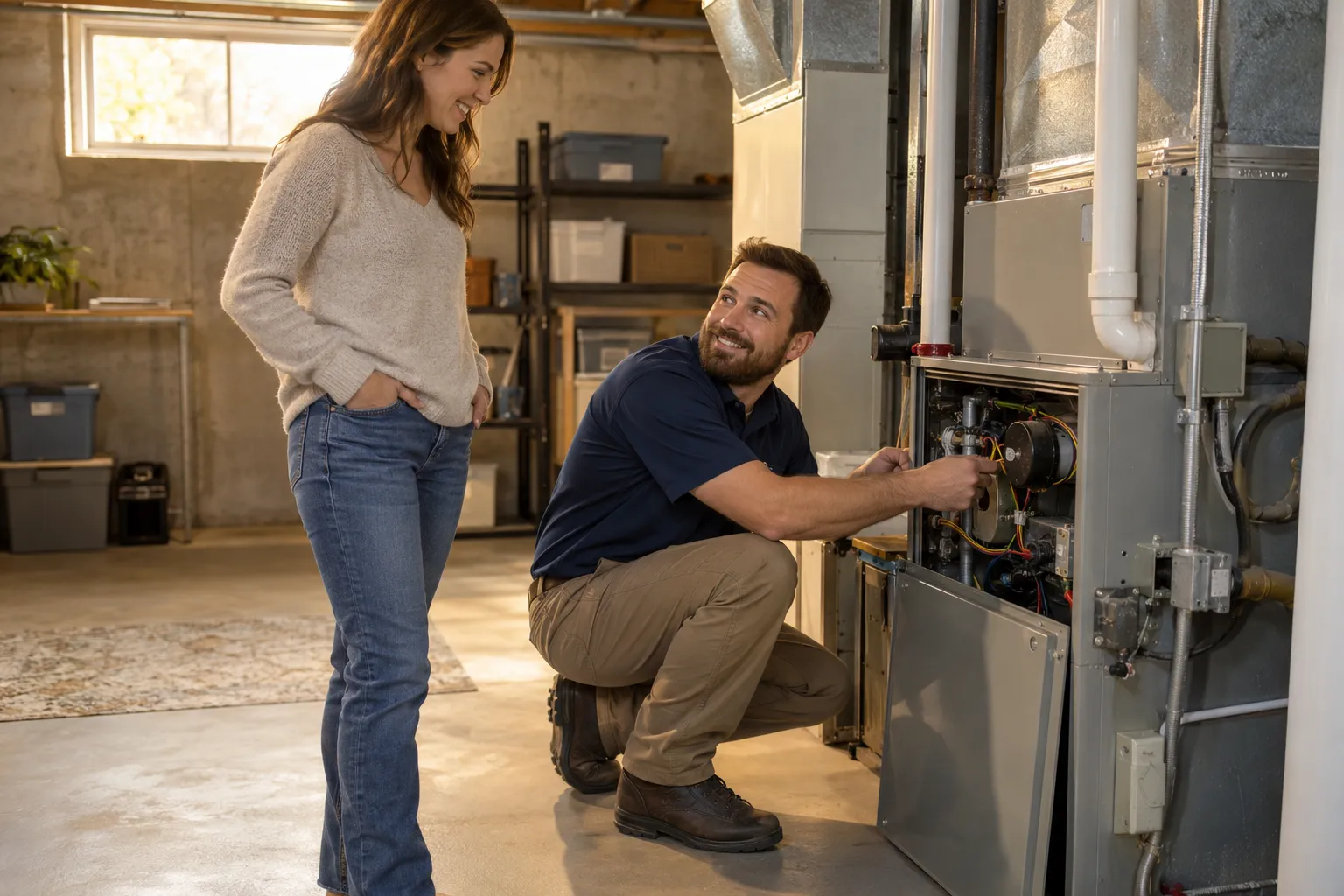
A furnace problem can feel urgent, and sometimes it is. Goldencarefully Heating & Air is a referral service. We connect homeowners in the Frederick area with independent providers in our network who handle furnace repair. We do not do the work ourselves. Our job is to help you reach a provider and to give you clear steps while you wait.
This page starts with what to do if you smell gas. It then covers simple checks, common repairs, and how to decide between repair and replacement. It also explains what keeps a furnace healthy after the repair, with extra notes for older homes. Know your home's age, because it changes what a provider may find. Request a callback to check provider availability, or request an estimate online.
Gas smells like rotten eggs. If you notice it near your furnace, treat it as serious and act before anything else.
Do:
Do not:
Carbon monoxide has no smell. A cracked heat exchanger or a blocked vent can let it into your rooms. Headaches, dizziness, nausea, or a sounding alarm are warning signs.
If you notice them, move outdoors into fresh air and call 911. Do not go back inside until responders say it is safe. Keep working CO alarms on every level, and one near the bedrooms.
If there is no gas smell and no alarm, a few simple checks are safe to do.
Do not open the burner cabinet, bypass a safety switch, or relight a pilot you are unsure about. Reset a tripped breaker once at most. If it trips again, something deeper is wrong.
Some signs are a nuisance. Others are a reason to stop and get help.
Turn the furnace off at the thermostat and get it looked at if you see a yellow or flickering flame instead of a steady blue one. The same goes for soot around the unit, a burning smell that lingers, or water pooling near the base. These can point to unsafe combustion or venting.
A good visit starts with safety. The provider will usually check for gas leaks, test for carbon monoxide, and look at the venting before anything else.
Next comes the diagnosis. Expect questions about the symptoms and when they began. The provider then inspects the thermostat, ignitor, flame sensor, blower, and controls. Ask for the cause in plain words and a written quote before work begins.
A worn ignitor or a dirty flame sensor is a frequent reason a furnace starts, then quits. These parts are small, and the fix is often quick.
Weak airflow or a humming noise can mean a failing capacitor or motor. Heat can build up inside the unit when the blower struggles, so do not ignore it.
Sometimes the furnace is fine and the signal is not. Wiring faults and failed boards can mimic bigger problems.
This one is a safety issue. A crack can leak combustion gases. A provider will explain whether repair makes sense or whether replacement is the safer path.
Know your home's age. Older houses can hold surprises behind the walls and in the basement.
Tell the provider about any earlier repairs you know of. It helps them avoid guesswork.
The repair is only half the job. A few habits help keep the problem from coming back.
Ask the provider to leave notes on what they changed. Those notes help at the next visit.
Age matters. Many furnaces start to struggle somewhere around 15 to 20 years. Replacement may deserve a look when repairs keep stacking up, when a heat exchanger is cracked, or when a single repair costs close to half the price of a new unit.
If you search for furnace replacement near me, compare written estimates from providers in the same terms. Ask about size, efficiency, venting, and who handles permits. Good heating and cooling advice looks at the whole house, not only the unit.
Request a callback to check provider availability, or send a request and share what your furnace is doing. Many providers can respond quickly, though timing varies.
The provider tests for gas leaks, carbon monoxide, and venting problems before touching any part of the furnace.
Symptoms are traced to a cause, and the provider explains it in plain words.
You receive the price and scope in writing before any repair work begins.
The provider can suggest upkeep steps after the repair, and speak honestly about replacement when the unit is worn out.
Prices vary by furnace type, parts, and how hard the unit is to reach. These are typical U.S. ranges only. Always ask for a written quote before work starts.
| Repair item | Typical range | Notes |
|---|---|---|
| Diagnostic visit | $75 – $200 | Often credited toward the repair at some providers |
| Ignitor or flame sensor | $100 – $400 | Common fix for start-and-quit problems |
| Capacitor or blower motor | $150 – $900 | Motor replacement costs more than a capacitor |
| Thermostat replacement | $100 – $400 | Smart models cost more |
| Control board | $300 – $900 | Depends on furnace brand and age |
| Heat exchanger repair or replacement | $1,000 – $3,500 | Often leads to a replacement discussion |
If you smell gas or hear a CO alarm, get outside and call 911 before anything else.
Check the thermostat, breaker, filter, and outdoor vents without opening the furnace.
Request a callback to check provider availability, or request an estimate online.
After the repair, ask for notes and set a yearly tune-up.
Plain do and do not steps help you stay safe while you wait for a provider.
Independent providers in our network serve homes across the Frederick area.
Notes on aging ducts, flues, and past repairs help set the right questions.
Guidance on upkeep helps you avoid repeat breakdowns after the work is done.
Tell us what your heating or cooling system is doing. Request a callback to check provider availability, or send a request and a local provider will follow up.
No obligationCommon causes include a clogged filter, a thermostat problem, a failing ignitor, or a blower issue. Check the filter and thermostat first. If heat is still weak, have a provider inspect the unit.
A brief dusty smell on the first start of the season can be normal. A burning smell that lingers is not. Turn the furnace off and have a provider check it.
Many furnaces last roughly 15 to 20 years, depending on upkeep and use. If yours is older and repairs keep adding up, ask a provider for a written replacement estimate.
Tell us what your heating or cooling system is doing. Request a callback to check provider availability, or send a request and a local provider will follow up.
No obligation